Kazuya Nagae
Music Culture Creation Department,
Nagoya University of the Arts’ School of Music
1.OVERVIEW
This is a report on the production of a SACD, “Beethoven: Overtures,” performed by the Deutsche Kammerphilharmonie Bremen with conductor Paavo Järvi. It was released as a Hybrid SACD with surround sound and CD-DA layers on the RCA Red Seal/Sony label on July 24, 2013. While this release was recorded in two different venues, this is a report of the recording session for The Creatures of Prometheus, Coriolan, and Fidelio overtures, which took place at the Funkhaus Berlin Nalepastrasse in December 2013. The recording of the Leonore, Egmont, and Consecration of the House overtures was carried out by the same recording team at Friedrich-Ebert-Halle Hamburg in 2010.
2.RECORDING
The recording was executed in DSD surround format, engineered by Jean-Marie Geijsen of Polyhymnia International BV, a recording company that became independent from Philips Classics Recording Center in 1998.
3.BACKGROUND OF THE PRODUCTION
The Deutsche Kammerphilharmonie Bremen is one of the world’s most eminent chamber orchestras, founded by a group of virtuoso music students in 1980, and Paavo Järvi, who has been serving as the artistic director of the orchestra since 2004. From 2004 through 2008, Paavo Järvi and the Deutsche Kammerphilharmonie Bremen were engaged in the “Beethoven Project,” in which they performed and then recorded all the Beethoven symphonies in surround sound DSD format. This new release of “Beethoven Overtures” took place as a part of that project, and their serious dedication to Beethoven has resulted in tremendous international recognition and acclaim. Nowadays it has become less common to record an orchestra in studio sessions due to its great expense, so it is very important that the recording is produced for surround sound in a hall with such a wonderful acoustic. The recording was directed by Philip Traugott, a music producer who has served for productions of numerous classical CDs, and recorded by Jean-Marie Geijsen, the balance engineer. Having collaborated for many years, they showed really excellent teamwork.
4.VENUE OF THE RECORDING
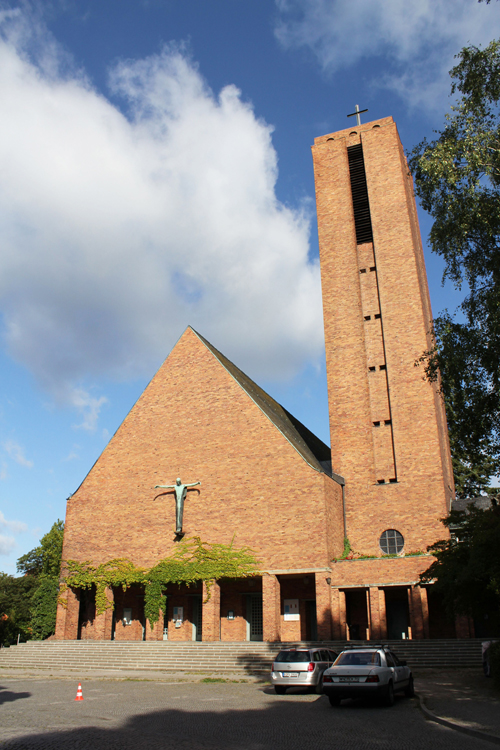
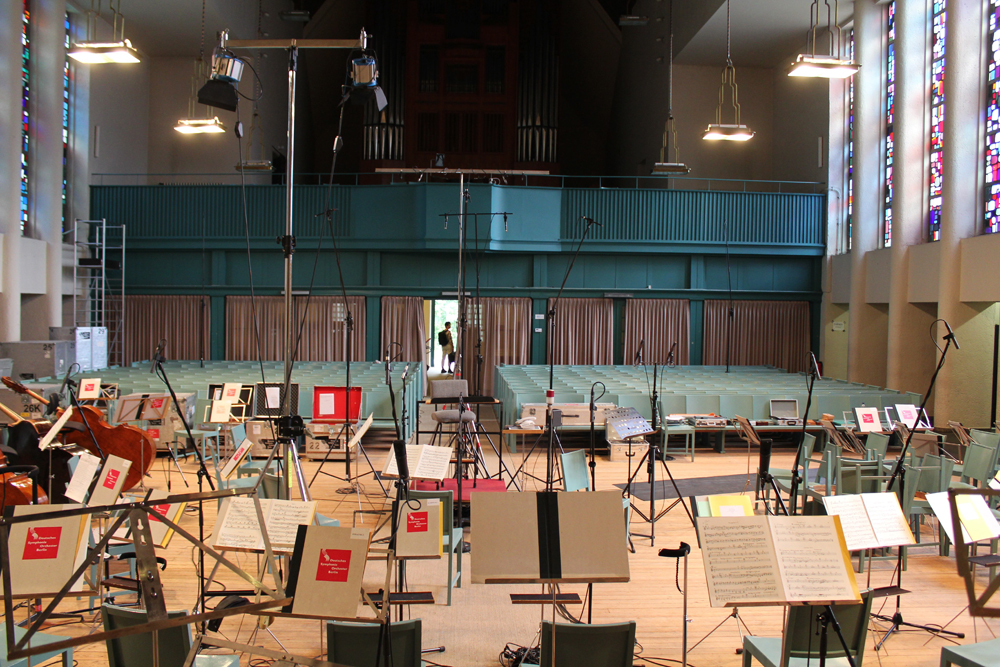
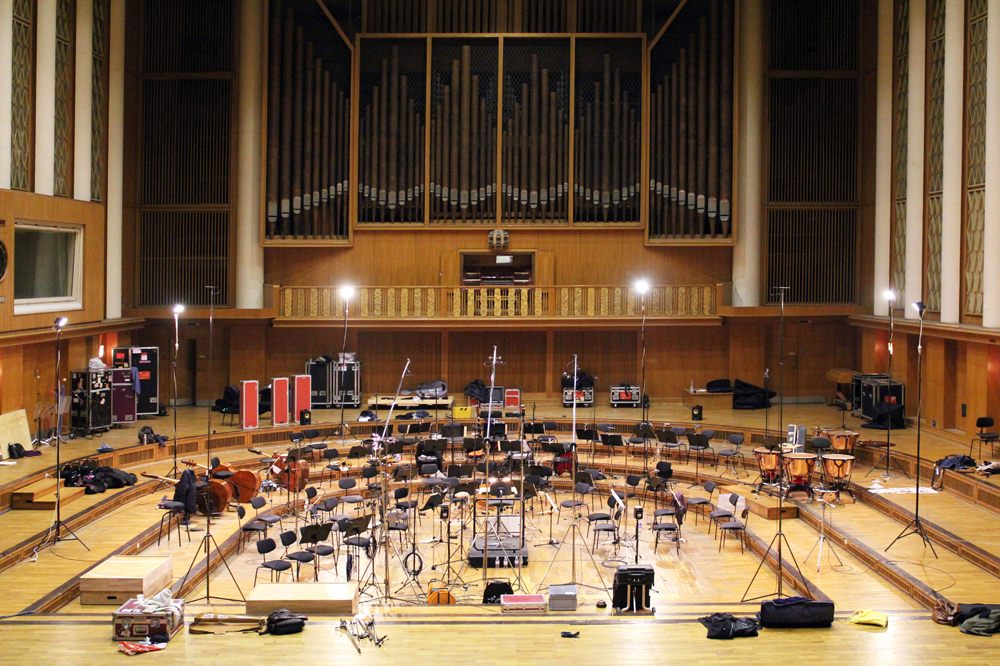
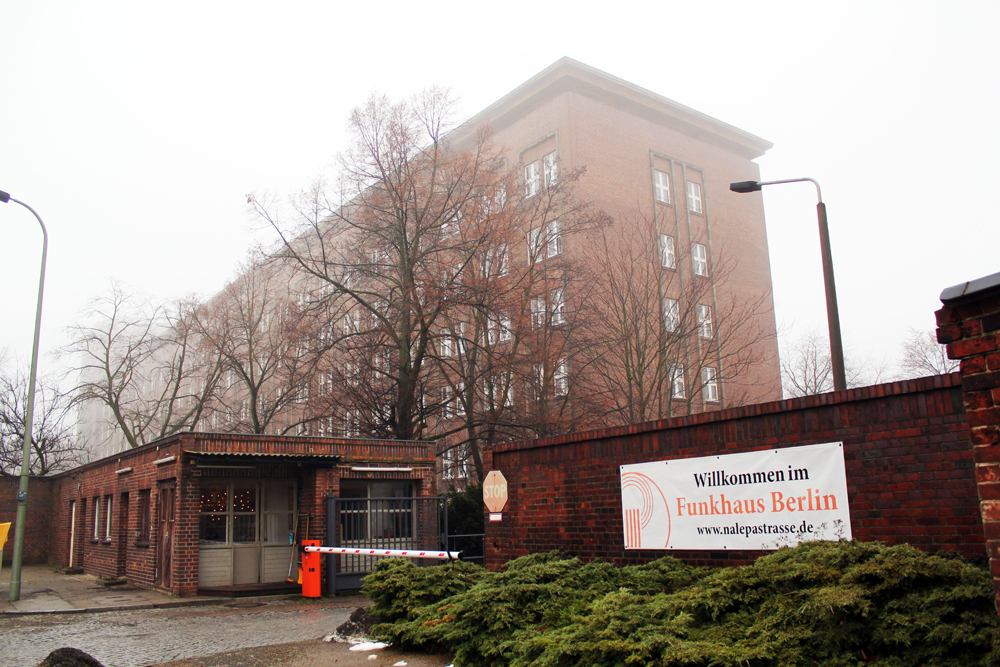
The recording took place at the Große Sendesaal 1 in the Funkhaus Berlin Nalepastrasse, which used to be a national broadcasting facility of the former East Germany from 1956 through 1990. This facility is located on the banks of the Spree River in Köpenick, about 12 kilometers southeast of central Berlin. After the unification of East and West Germany, its function as a broadcasting facility ended and it evolved into a world famous sound recording venue. There are 4 large, medium, and small halls and 2 studios suitable for pop and rock music, and the recording this time took place in the largest hall that is most suitable for orchestra recording. According to a Tonmeister from former East Germany, importation of music from foreign countries was restricted by DDR governmental control, but various musics from pop to classical were recorded in the facility and made available to the public.
Funkhaus Berlin Nalepastrasse

Layout of Hall and Studio © Studio Presse Verlag GmbH from 10.2007 Studio Magazine
According to Das Funkhaus: “Stammhaus” von Rundfunk-Orchestern written by Dipl. Ing. Gerhard Steinke, a sound engineer from former East Germany, the hall was designed with the idea that the height of the ceiling needs to be more than twice as long as the width between the walls in order to gain an ideal acoustic for musical performance, as at the Musikverein in Vienna or the Jesus-Christus-Kirche Dahlem in West Berlin. Steinke says that the average length of reverberation in the hall is about 2 seconds and that the middle-low range frequencies, which influence clearness of instrumental sound, tend not to be masked because of the studio’s unique frequency characteristic of reverberation length, called “S-form.” Like an “S” turned sideways when shown in a polygonal line, it shows a decrease of reverberation in the range between 125 Hz and 250 Hz, and the reverberation in the range lower than 150 Hz realizes a connection of the space which is necessary for surround sound. (“Nalepastrasse (Nalepa Street),” by which the venue is often referred to, is the name of an 80-meter long street which connects the facility and the main street.)

from Das Funkhaus= „Stammhaus“von Rundfunk-Orchestern © Dipl. Ing. Gerhard Steinke

5.RECORDING METHODS AND EQUIPMENT
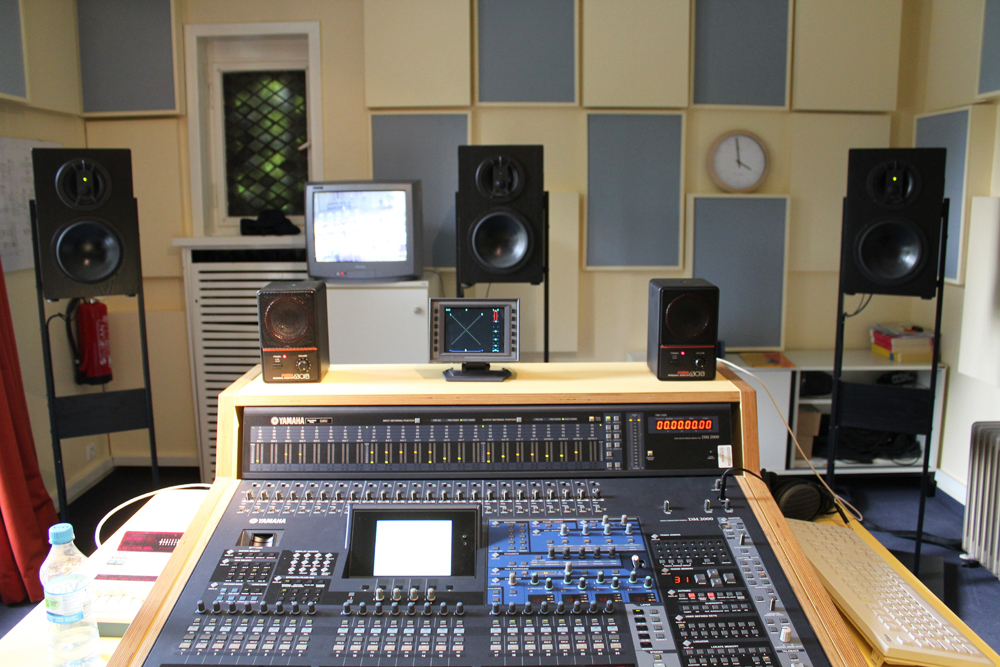
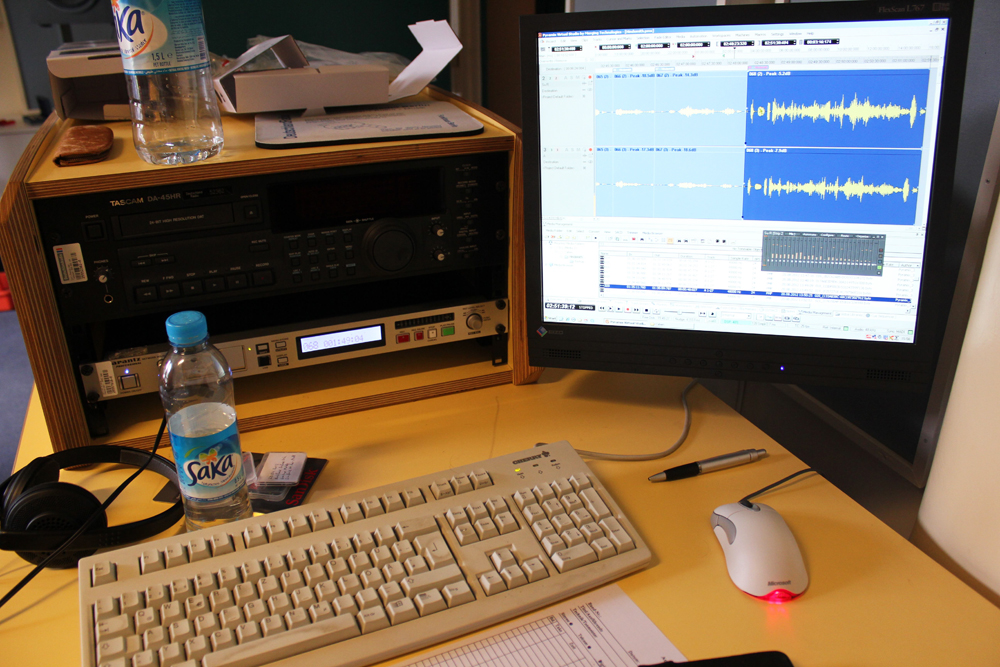
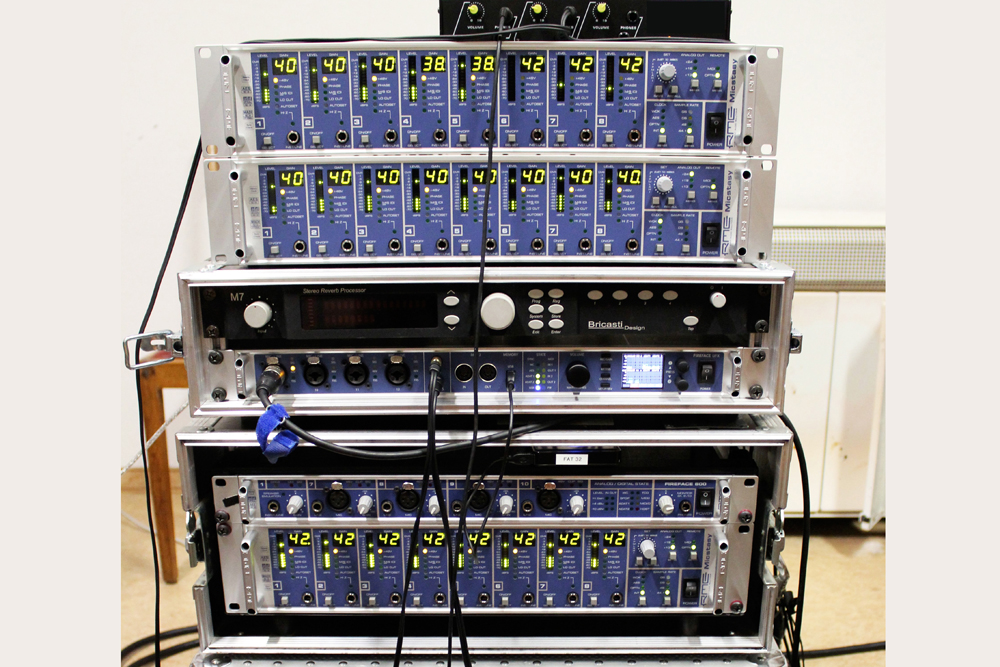
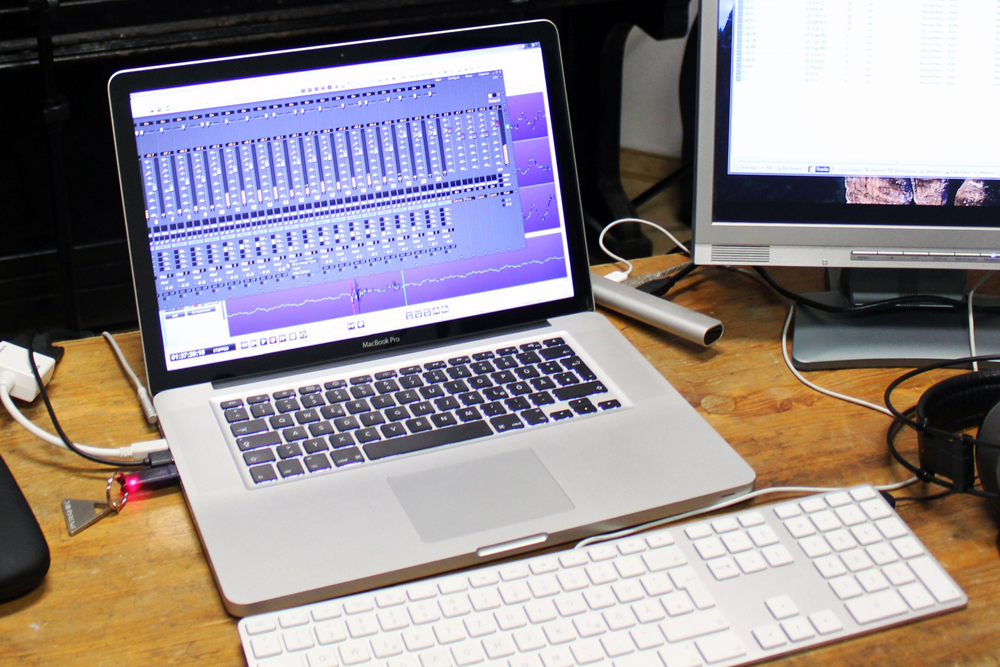
Equipment system for the recording this time is shown in Figure 1. All the equipment was brought in from the Netherlands by Polyhymnia’s carrier vehicle. The control room, an adjacent empty work room near the studio, was created using a DAW system by MERGING Technologies Pyramix as the main equipment. A TASCAM DM-3200 console was set for fader control, B&W Nautilus 803 was set as a L/R monitor, and B&W Nautilus 805 was set as a C/LS/RS monitor. The microphone amplifier was Philips’ custom model, developed especially for Philips Recording Center, and it was A/D/D/A converted by Emm Labs ADC8 MK IV & DAC8 MK IV, converted by multi-recorded in 24-Track DSD.
Equipment System (Figure 1)

Equipments
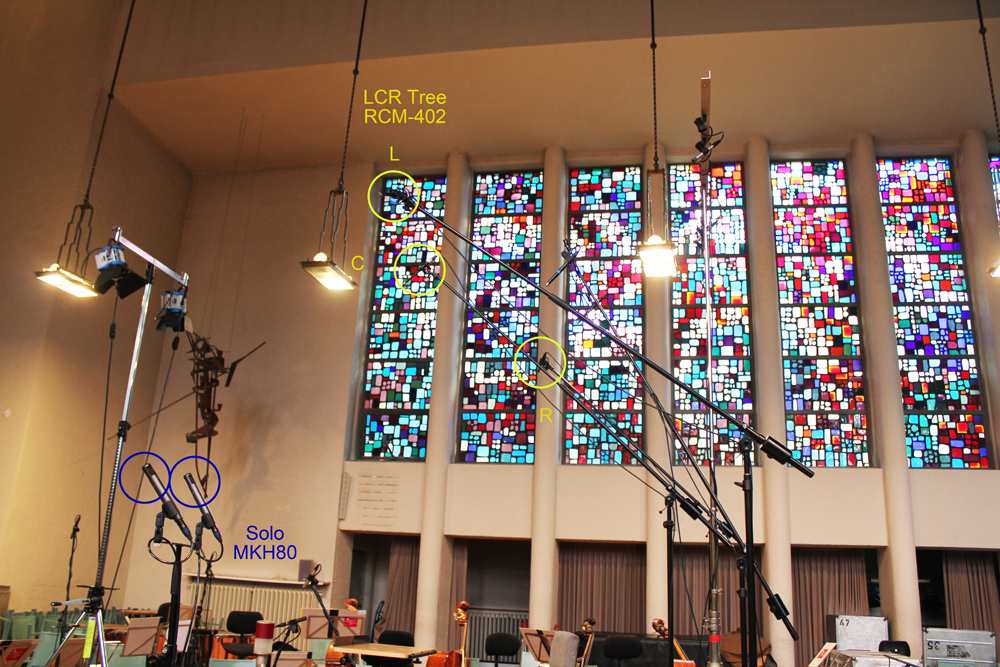
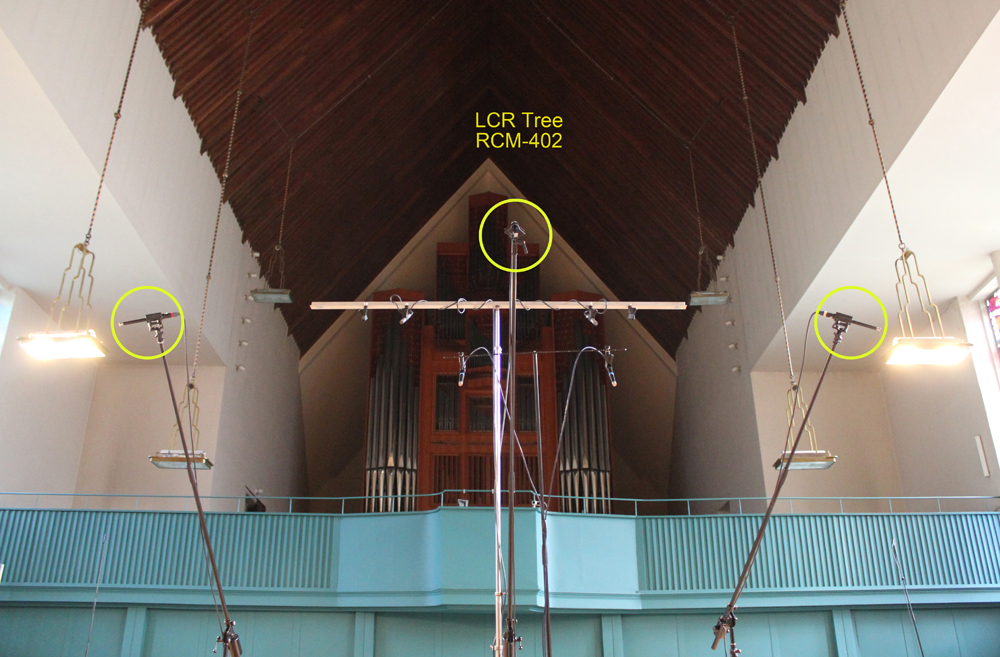
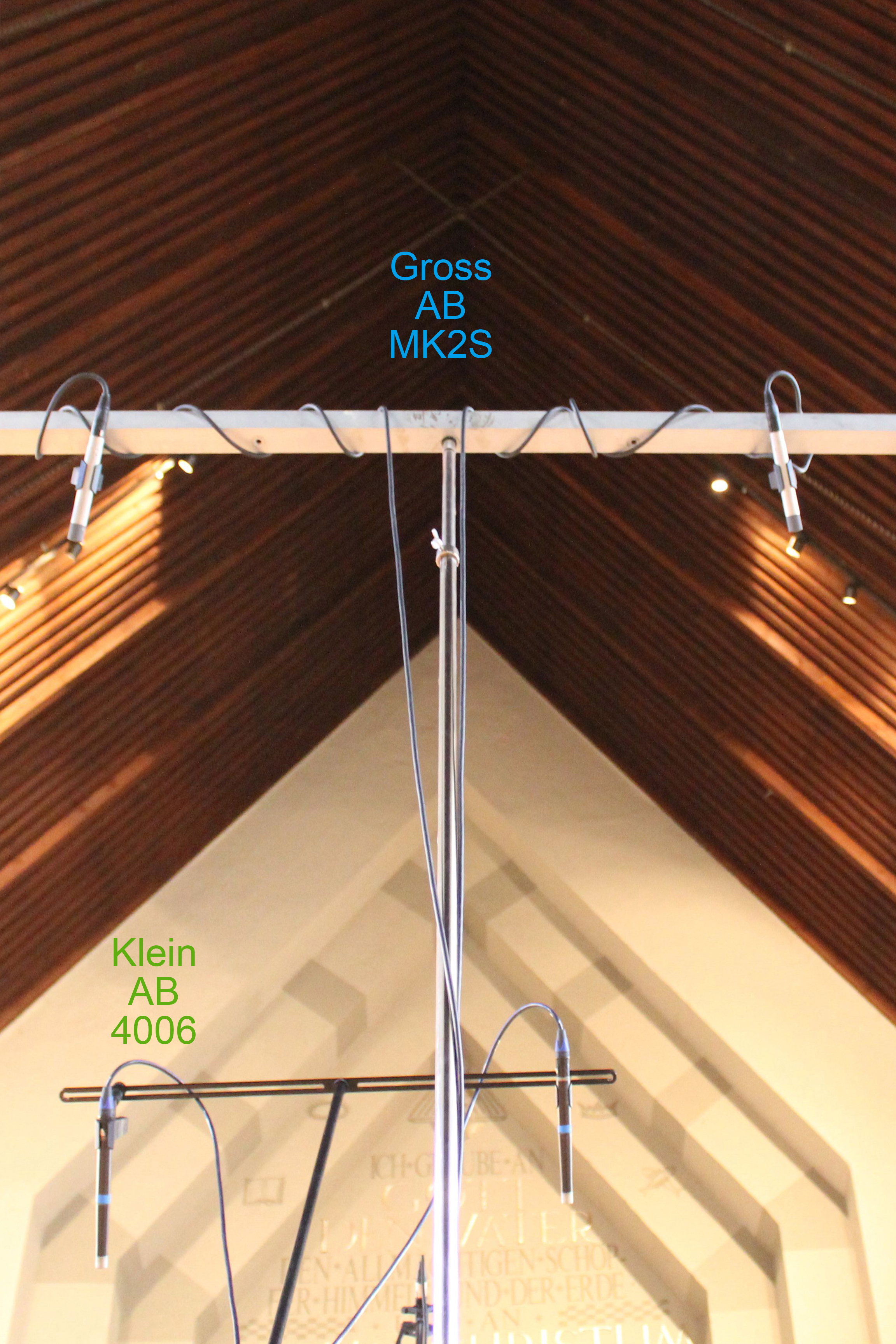
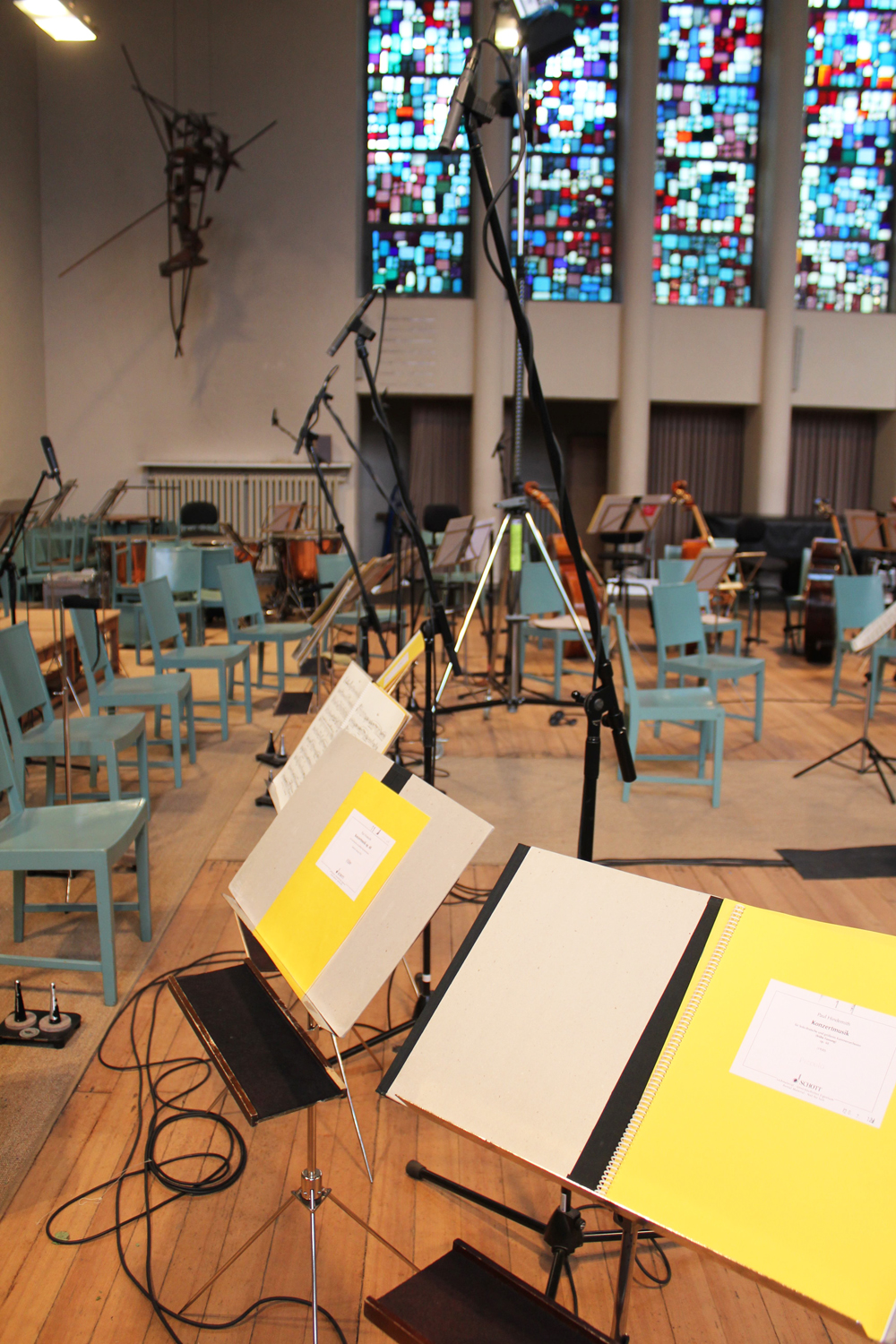
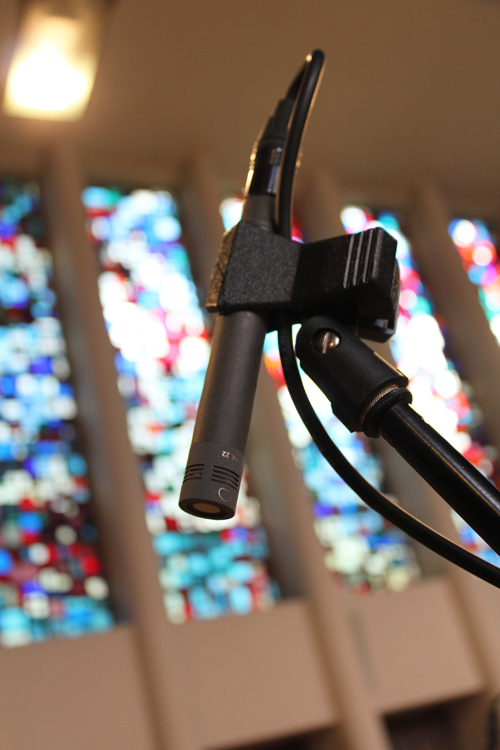
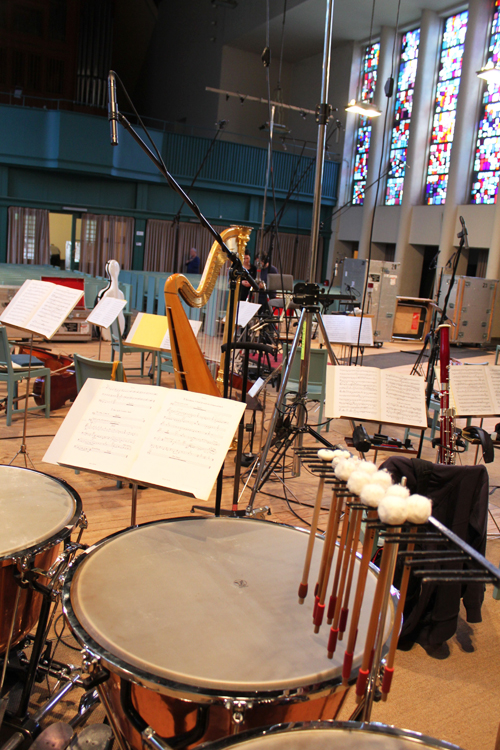
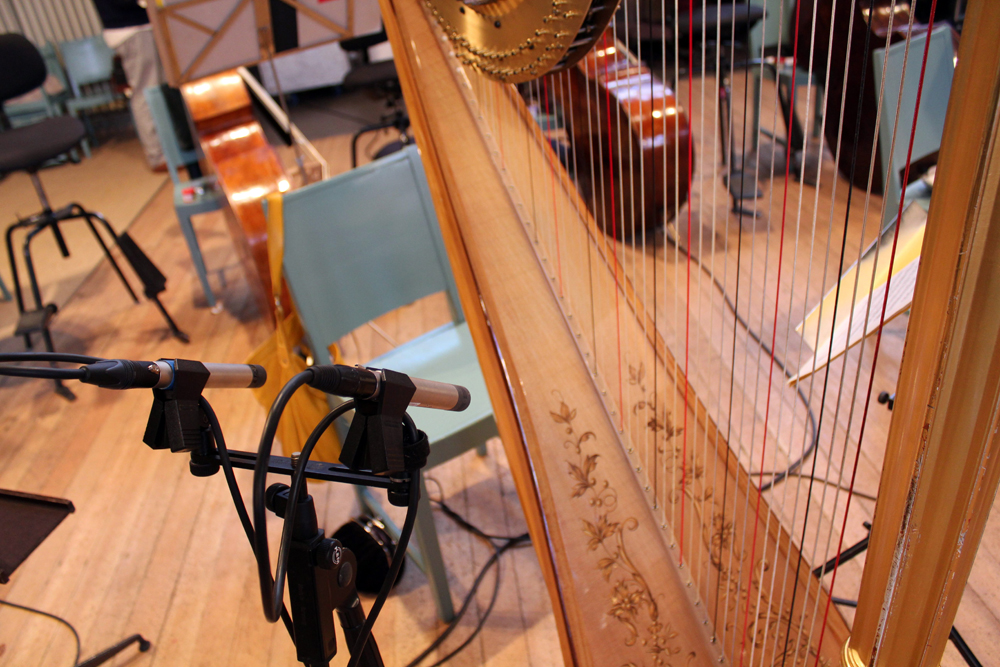
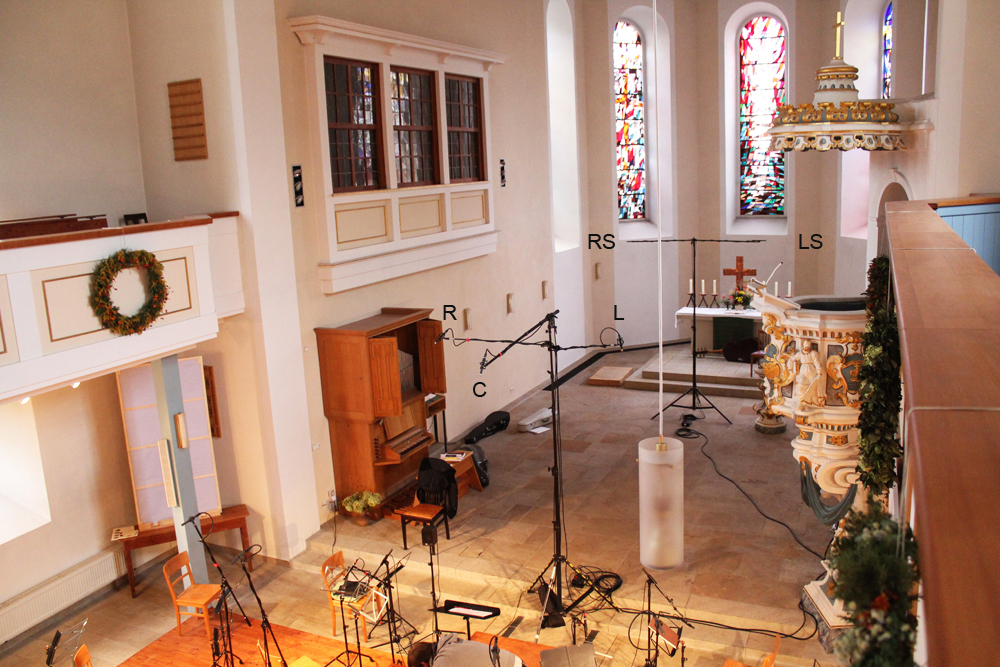
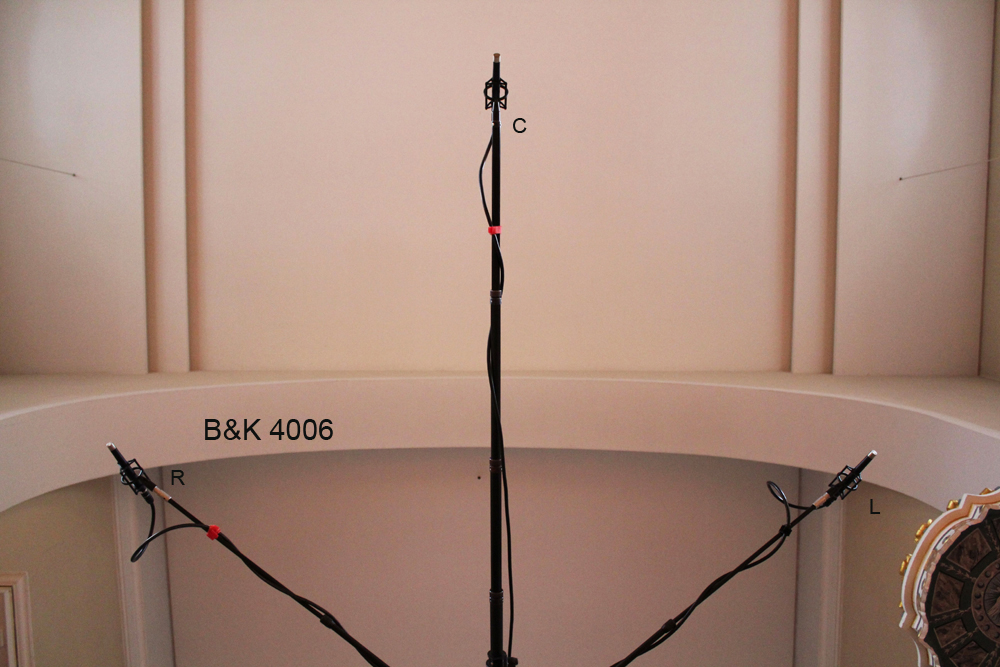
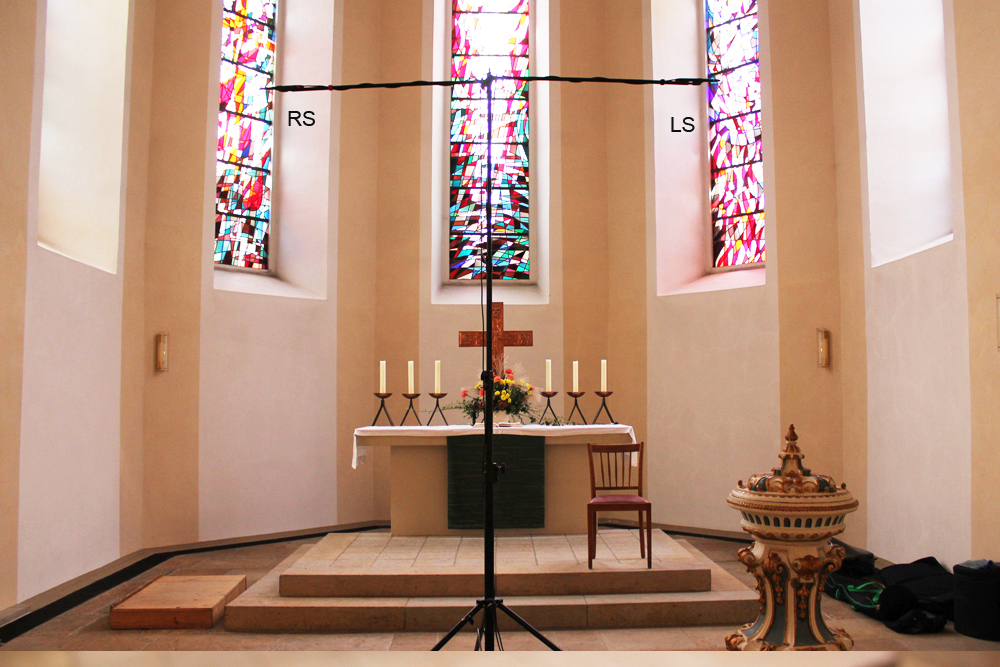
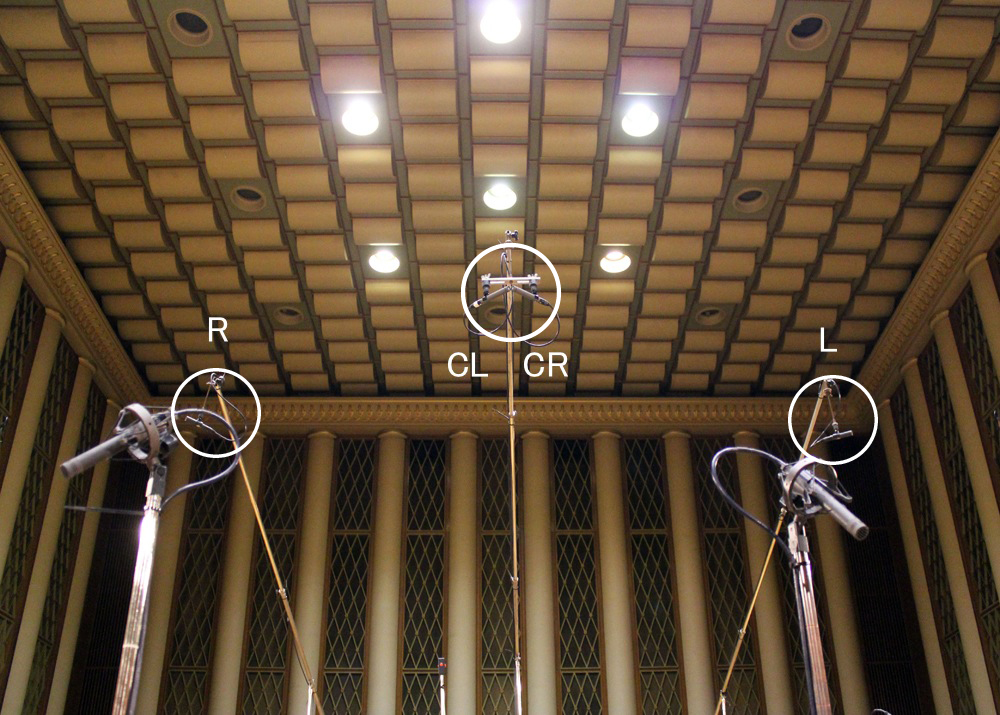
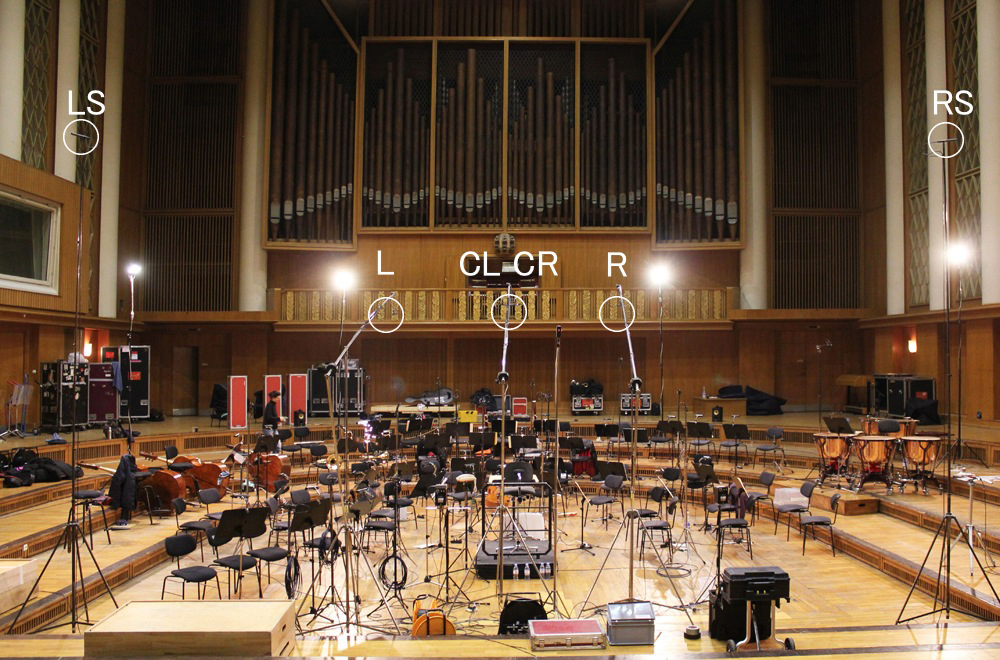
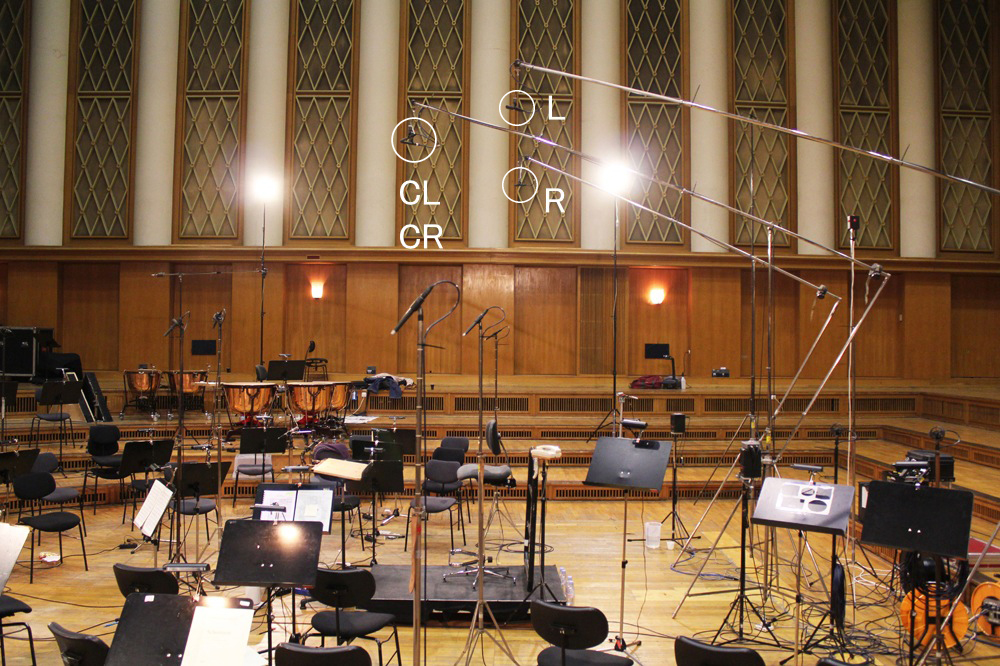
6.ARRANGEMENT OF THE MICROPHONESMicrophone arrangement for the recording this time is shown in Figure 2. After its own longtime study, Polyhymnia uses Polyhymnia 5 OMNIS, which sets 5 omni-directional microphones arranged in placement imitating ITU-R BS775, a placement arrangement of surround speakers. However, this time, because the product was going to be released as a SACD hybrid disc with both a surround sound layer and a stereo sound layer, the main microphone was equipped with 2 open cardioid Schoeps Mk22s placed in X-Y stereo configuration as C-L/C-R instead of just one C microphone on the Polyhymnia Surround Array. As the stereo image is narrowed down if the C=Mono component is localized in the center when mixed for stereo, the main microphone was arranged in this way in order to make it possible to mix surround sound material and stereo sound material in the best way for both materials by localizing C-L/C-R in L-R to prevent the orientation of the sound material to be narrowed down in stereo mixing and by combining C-L/C-R into mono and localizing it in C. Spot microphones included B&K 4011, 4006, Schoeps Mk4, and Neumann KM140, and they were arranged to make it possible to gain sound from requisite spots by just placing adequate directional microphones for the recorded instruments’ radiation characteristics at proper position. In addition, Polyhymnia says it modifies amplifier circuits in the main units of the microphones so that the output of all the different types of microphones are adjusted to the same levels.
Microphone Arrangement (Figure 2)


7.POST PRODUCTION
Post production was carried out at the Polyhymnia studio in the Netherlands, and following are some details of the post production I found out by interviewing Mr. Jean-Marie Geijsen.
Staying in Berlin as a Nagoya University of Arts’ overseas research personnel, I have engaged in recordings of classical music and worked on my researches on tonmeister education. Thanks to a number of different people’s hospitality, I was able to observe many recording sessions. This particular recording project was carried out as a summing-up of the recordings of all the Beethoven symphonies that Paavo Järvi and the Deutsche Kammerphilharmonie Bremen have been working on. It is definitely not an easy task, and I could see that the project was only made possible by the efforts and will of the conductor, the orchestra, the label, the recording staff and good communication between them to produce a great work. Furthermore, the hall in Nalepastrasse had wonderful acoustics, and I felt it is very meaningful that the session took place in such an ideal venue for a surround sound recording.
Lastly, I would like to thank Mr. Jean Marie Geijsen who gladly granted me an approval to publish this report on the recording on Surround Terakoya.
This is a report on the production of a SACD, “Beethoven: Overtures,” performed by the Deutsche Kammerphilharmonie Bremen with conductor Paavo Järvi. It was released as a Hybrid SACD with surround sound and CD-DA layers on the RCA Red Seal/Sony label on July 24, 2013. While this release was recorded in two different venues, this is a report of the recording session for The Creatures of Prometheus, Coriolan, and Fidelio overtures, which took place at the Funkhaus Berlin Nalepastrasse in December 2013. The recording of the Leonore, Egmont, and Consecration of the House overtures was carried out by the same recording team at Friedrich-Ebert-Halle Hamburg in 2010.
2.RECORDING
The recording was executed in DSD surround format, engineered by Jean-Marie Geijsen of Polyhymnia International BV, a recording company that became independent from Philips Classics Recording Center in 1998.
3.BACKGROUND OF THE PRODUCTION
The Deutsche Kammerphilharmonie Bremen is one of the world’s most eminent chamber orchestras, founded by a group of virtuoso music students in 1980, and Paavo Järvi, who has been serving as the artistic director of the orchestra since 2004. From 2004 through 2008, Paavo Järvi and the Deutsche Kammerphilharmonie Bremen were engaged in the “Beethoven Project,” in which they performed and then recorded all the Beethoven symphonies in surround sound DSD format. This new release of “Beethoven Overtures” took place as a part of that project, and their serious dedication to Beethoven has resulted in tremendous international recognition and acclaim. Nowadays it has become less common to record an orchestra in studio sessions due to its great expense, so it is very important that the recording is produced for surround sound in a hall with such a wonderful acoustic. The recording was directed by Philip Traugott, a music producer who has served for productions of numerous classical CDs, and recorded by Jean-Marie Geijsen, the balance engineer. Having collaborated for many years, they showed really excellent teamwork.
4.VENUE OF THE RECORDING
The recording took place at the Große Sendesaal 1 in the Funkhaus Berlin Nalepastrasse, which used to be a national broadcasting facility of the former East Germany from 1956 through 1990. This facility is located on the banks of the Spree River in Köpenick, about 12 kilometers southeast of central Berlin. After the unification of East and West Germany, its function as a broadcasting facility ended and it evolved into a world famous sound recording venue. There are 4 large, medium, and small halls and 2 studios suitable for pop and rock music, and the recording this time took place in the largest hall that is most suitable for orchestra recording. According to a Tonmeister from former East Germany, importation of music from foreign countries was restricted by DDR governmental control, but various musics from pop to classical were recorded in the facility and made available to the public.
Funkhaus Berlin Nalepastrasse

Layout of Hall and Studio © Studio Presse Verlag GmbH from 10.2007 Studio Magazine
According to Das Funkhaus: “Stammhaus” von Rundfunk-Orchestern written by Dipl. Ing. Gerhard Steinke, a sound engineer from former East Germany, the hall was designed with the idea that the height of the ceiling needs to be more than twice as long as the width between the walls in order to gain an ideal acoustic for musical performance, as at the Musikverein in Vienna or the Jesus-Christus-Kirche Dahlem in West Berlin. Steinke says that the average length of reverberation in the hall is about 2 seconds and that the middle-low range frequencies, which influence clearness of instrumental sound, tend not to be masked because of the studio’s unique frequency characteristic of reverberation length, called “S-form.” Like an “S” turned sideways when shown in a polygonal line, it shows a decrease of reverberation in the range between 125 Hz and 250 Hz, and the reverberation in the range lower than 150 Hz realizes a connection of the space which is necessary for surround sound. (“Nalepastrasse (Nalepa Street),” by which the venue is often referred to, is the name of an 80-meter long street which connects the facility and the main street.)

from Das Funkhaus= „Stammhaus“von Rundfunk-Orchestern © Dipl. Ing. Gerhard Steinke
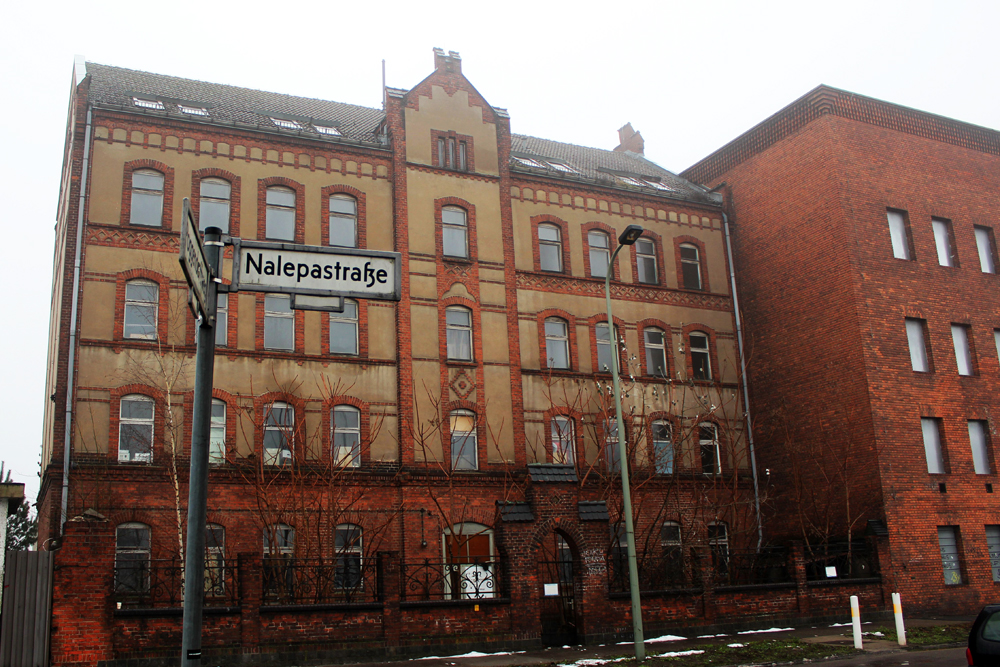
5.RECORDING METHODS AND EQUIPMENT
Equipment system for the recording this time is shown in Figure 1. All the equipment was brought in from the Netherlands by Polyhymnia’s carrier vehicle. The control room, an adjacent empty work room near the studio, was created using a DAW system by MERGING Technologies Pyramix as the main equipment. A TASCAM DM-3200 console was set for fader control, B&W Nautilus 803 was set as a L/R monitor, and B&W Nautilus 805 was set as a C/LS/RS monitor. The microphone amplifier was Philips’ custom model, developed especially for Philips Recording Center, and it was A/D/D/A converted by Emm Labs ADC8 MK IV & DAC8 MK IV, converted by multi-recorded in 24-Track DSD.
Equipment System (Figure 1)
Equipments
|
|
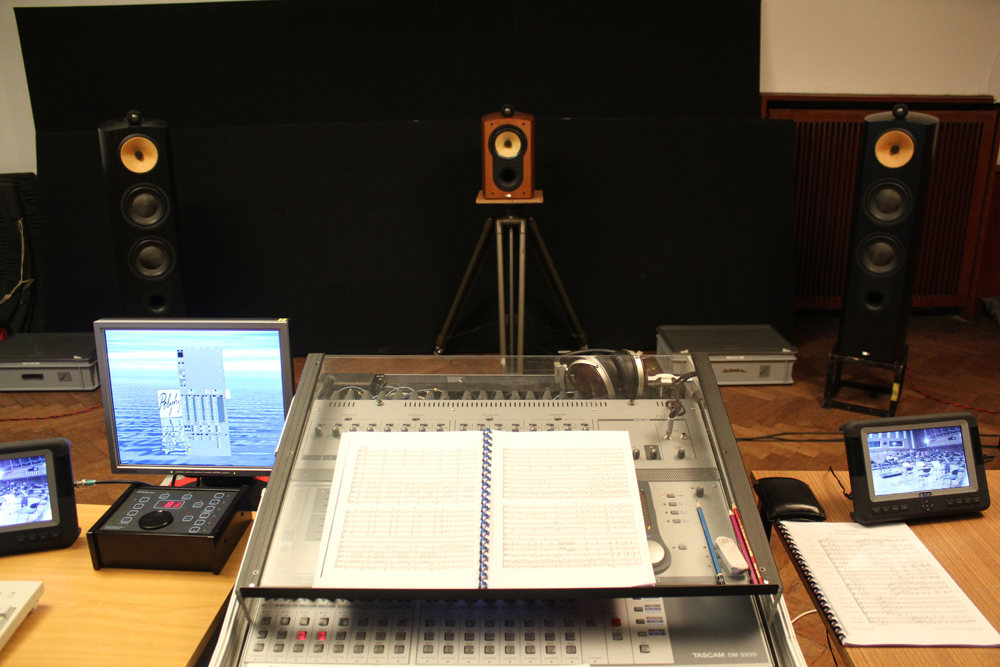 Control Room
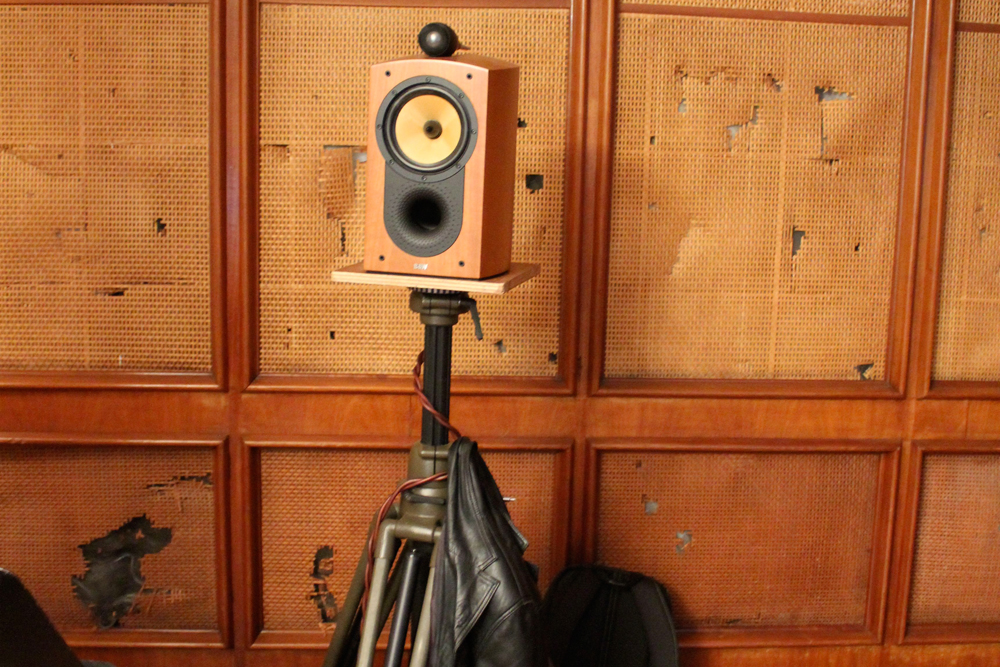 Surround LS
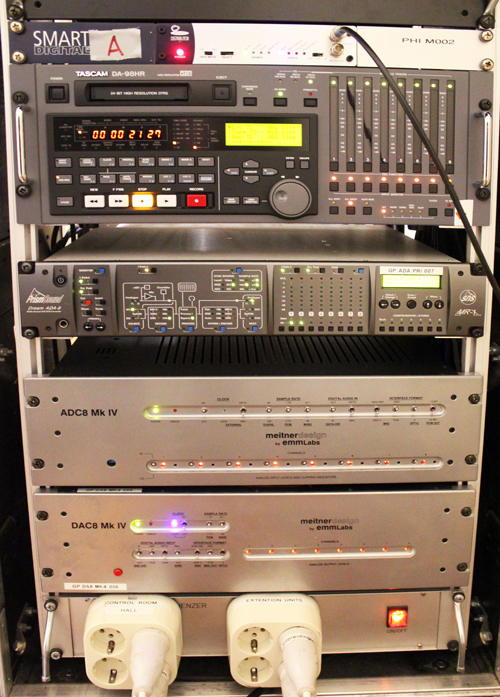 EMM Labs ADC8 MK IV / DAC8 MK IV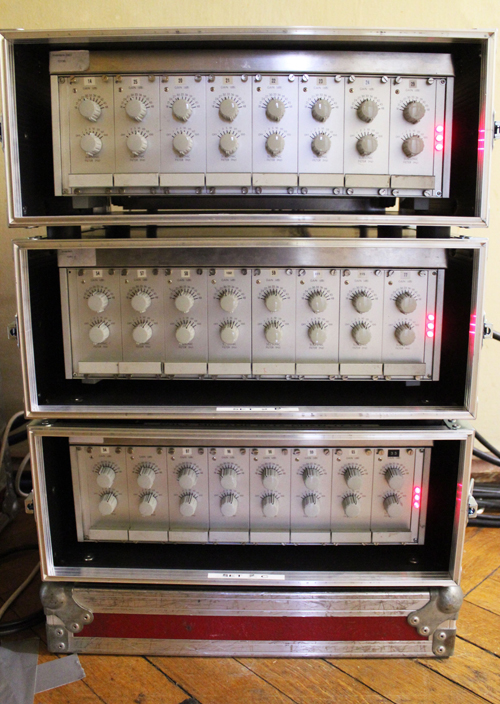
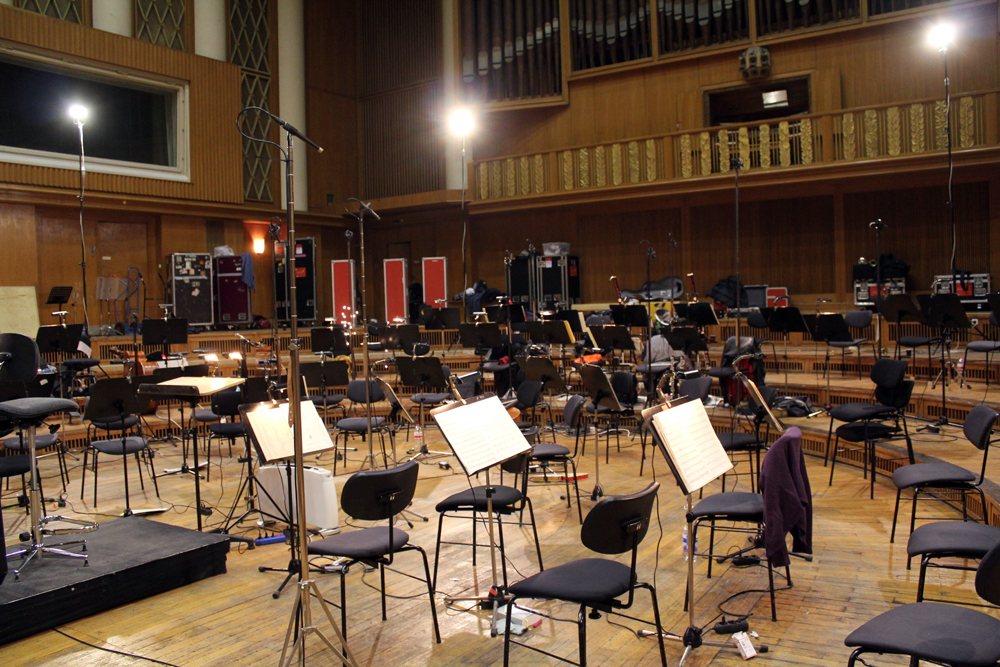
6.ARRANGEMENT OF THE MICROPHONESMicrophone arrangement for the recording this time is shown in Figure 2. After its own longtime study, Polyhymnia uses Polyhymnia 5 OMNIS, which sets 5 omni-directional microphones arranged in placement imitating ITU-R BS775, a placement arrangement of surround speakers. However, this time, because the product was going to be released as a SACD hybrid disc with both a surround sound layer and a stereo sound layer, the main microphone was equipped with 2 open cardioid Schoeps Mk22s placed in X-Y stereo configuration as C-L/C-R instead of just one C microphone on the Polyhymnia Surround Array. As the stereo image is narrowed down if the C=Mono component is localized in the center when mixed for stereo, the main microphone was arranged in this way in order to make it possible to mix surround sound material and stereo sound material in the best way for both materials by localizing C-L/C-R in L-R to prevent the orientation of the sound material to be narrowed down in stereo mixing and by combining C-L/C-R into mono and localizing it in C. Spot microphones included B&K 4011, 4006, Schoeps Mk4, and Neumann KM140, and they were arranged to make it possible to gain sound from requisite spots by just placing adequate directional microphones for the recorded instruments’ radiation characteristics at proper position. In addition, Polyhymnia says it modifies amplifier circuits in the main units of the microphones so that the output of all the different types of microphones are adjusted to the same levels.
Microphone Arrangement (Figure 2)
7.POST PRODUCTION
Post production was carried out at the Polyhymnia studio in the Netherlands, and following are some details of the post production I found out by interviewing Mr. Jean-Marie Geijsen.
- The editing score was marked by producer Philip Traugott in New York, and then the score was faxed to Polyhymnia’s studio.
- The editing was done at Polyhymnia by Everett Porter, (who started the “Beethoven Project” as a balance engineer before Jean-Marie Geijsen took over), who also did a first mix, in stereo which was sent back to Philip Traugott in New York.
- For a detailed final edit and mix, Paavo Järvi, together with Philip Traugott and Everett Porter, did a 2-day playback session with all original DSD material on location in Bremen, Germany.When the conductor was happy with the musical result and the stereo sound, Everett made a surround mix at Polyhymnia, and finally both the stereo and surround DSD files were sent to the authoring studio.
- During mixing and mastering no compression or other dynamic tools were used.
Staying in Berlin as a Nagoya University of Arts’ overseas research personnel, I have engaged in recordings of classical music and worked on my researches on tonmeister education. Thanks to a number of different people’s hospitality, I was able to observe many recording sessions. This particular recording project was carried out as a summing-up of the recordings of all the Beethoven symphonies that Paavo Järvi and the Deutsche Kammerphilharmonie Bremen have been working on. It is definitely not an easy task, and I could see that the project was only made possible by the efforts and will of the conductor, the orchestra, the label, the recording staff and good communication between them to produce a great work. Furthermore, the hall in Nalepastrasse had wonderful acoustics, and I felt it is very meaningful that the session took place in such an ideal venue for a surround sound recording.
Lastly, I would like to thank Mr. Jean Marie Geijsen who gladly granted me an approval to publish this report on the recording on Surround Terakoya.
 |
SACD Infomation
Beethoven: Overtures
Deutsche Kammerphilharmonie Bremen
Conductor : Paavo Järvi
Released: 24 July 2013
Label: Sony Classical SICC-10190
|
1.The Creatures of Prometheus (Die Geschöpfe des Prometheus) Overture Op.43
2.Coriolan Overture Op.62
3.Fidelio OvertureOp.72c
4.Leonore Overture No.3 Op.72B
5.Egmont Overture Op. 84
6.The Consecration of the House (Die Weihe des Hauses) Overture Op.124
Credits
Recording :
1.2.3 on December 18-20,2012 at Funkhaus Berlin Nalepastrasse
4.5.6 on July 19-21,2010 at Friedrich-Ebert-Halle, Hamburg
Produced by Philip Traugott (www.philiptraugott.com)
Balance Engineer : Jean-Marie Geijsen (Polyhymnia International)
Recording Engineer : Roger de Schot (Polyhymnia International)
Editing, Mixing, & Masteing Engineer : Everett Porter (Polyhymnia International)
Editing : Everett Porter & Ientje Mooj (Polyhymnia International)
Exective Producers : Deutsche Kammerphilharmonie Bremen & Paavo Järvi
℗&© 2013 Deutsche Kammerphilharmonie Bremen.
Under Licence to Sony Music Japan International Inc.
Jean-Marie is one of the balance engineers at Polyhymnia International . He has worked with many top classical artists, including Alfred Brendel, Ricardo Muti, J.E.Gardiner, Valeri Gergiev, Seiji Ozawa, Fabio Luisi, and Ivan Fischer. He has also recorded two albums for Andrea Bocelli, "Opera arias" and "Sacred Arias". Jean-Marie studied audio recording at the Royal Conservatory in The Hague between 1984 and 1988, specializing in classical music with a special interest in baroque music.
Translated by Hitoshi Sugie

Translated by Hitoshi Sugie